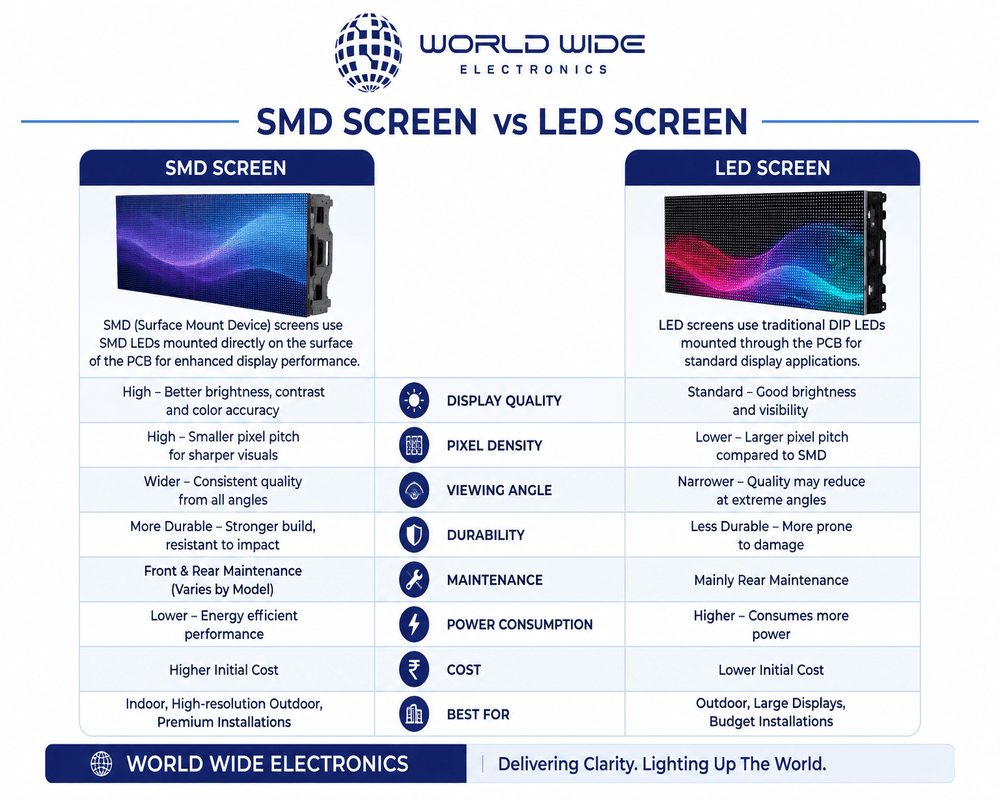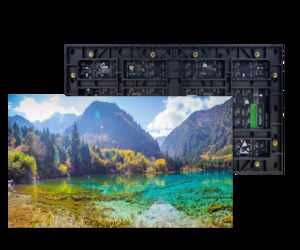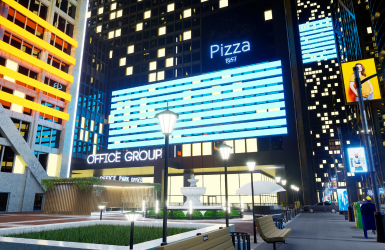
A shop front is the only advertising a store owns that works for every passer-by, every day, without a printing bill each time the offer changes. A shop front SMD LED screen turns that window into a display that can show new arrivals, sale prices and opening hours in bright colour, and update them in seconds. Many retailers start with a single screen behind the glass and expand once they see how often people stop to look. Our digital screens for shops are built for exactly this job. This guide explains how retailers use them, how to choose brightness, size and content, and how to measure whether the screen is bringing people in.
What Is a Shop Front LED Screen?
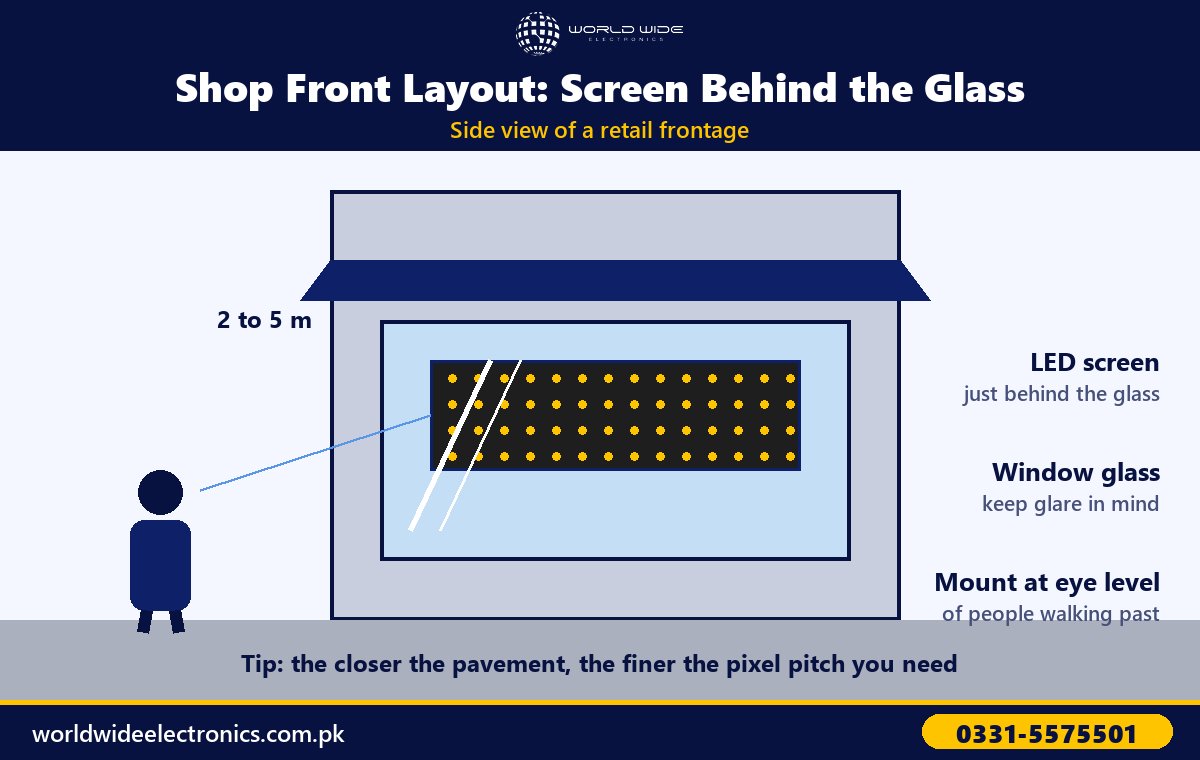
A shop front SMD LED screen is a display installed in or near a store window, facing the street. It is made of LED modules joined into a panel, driven by a media controller that plays images, video or text from a computer, a USB drive or a cloud playlist. Unlike a printed poster, the picture can change through the day and from one week to the next without anyone visiting the shop to replace the print.
There are two common ways to fit one:
- Inside the window, set back a little from the glass. This suits most shops, because the screen is protected from weather and dust, and it can be serviced from inside.
- On the facade, mounted outside on the frontage. This gives the strongest street presence, but the screen must be an outdoor model with weatherproof sealing and much higher brightness.
Why Retailers Use Window Display Screens
A window display screen does a few jobs that a static sign cannot do well:
- It gets attention from further away. Moving images and bright colour are easier to notice from across the street than a printed board.
- It can change offers quickly. A weekend sale, an Eid promotion or a new product launch can be on screen the same day it is approved.
- It can run different content at different times. Breakfast offers in the morning, evening deals after work, or opening hours on Sunday.
- It replaces reprinting costs. Once installed, each new message costs only the time to prepare the content.
The screen does not sell on its own. It works best when it draws a passer-by to the window and the shop itself then makes the sale. Keep that in mind when you decide what to show.
For the wider business case across different types of venue, read Digital Signage in Pakistan for Business. It covers how the same screens work in restaurants, malls and offices. Our guide to Top Benefits of SMD Screens for Businesses looks at the return on the screen itself.
Shop Front Screen vs Printed Poster or Backlit Sign
| Feature | Printed poster | Backlit sign | Shop front LED screen |
|---|---|---|---|
| Change the message | Reprint and reinstall | Replace the panel | Upload new content |
| Motion and video | No | No | Yes |
| Different content by time of day | No | No | Yes |
| Visible in daylight | Yes, if lit | Yes | Yes, with high brightness |
| Running cost | Print each change | Electricity and lamps | Electricity and occasional service |
For a shop that changes its offers often, the LED screen usually pays back its cost through reduced printing and faster promotions. For a shop with one message that never changes, a well-made sign may be enough.
Brightness for a High Brightness Window Screen
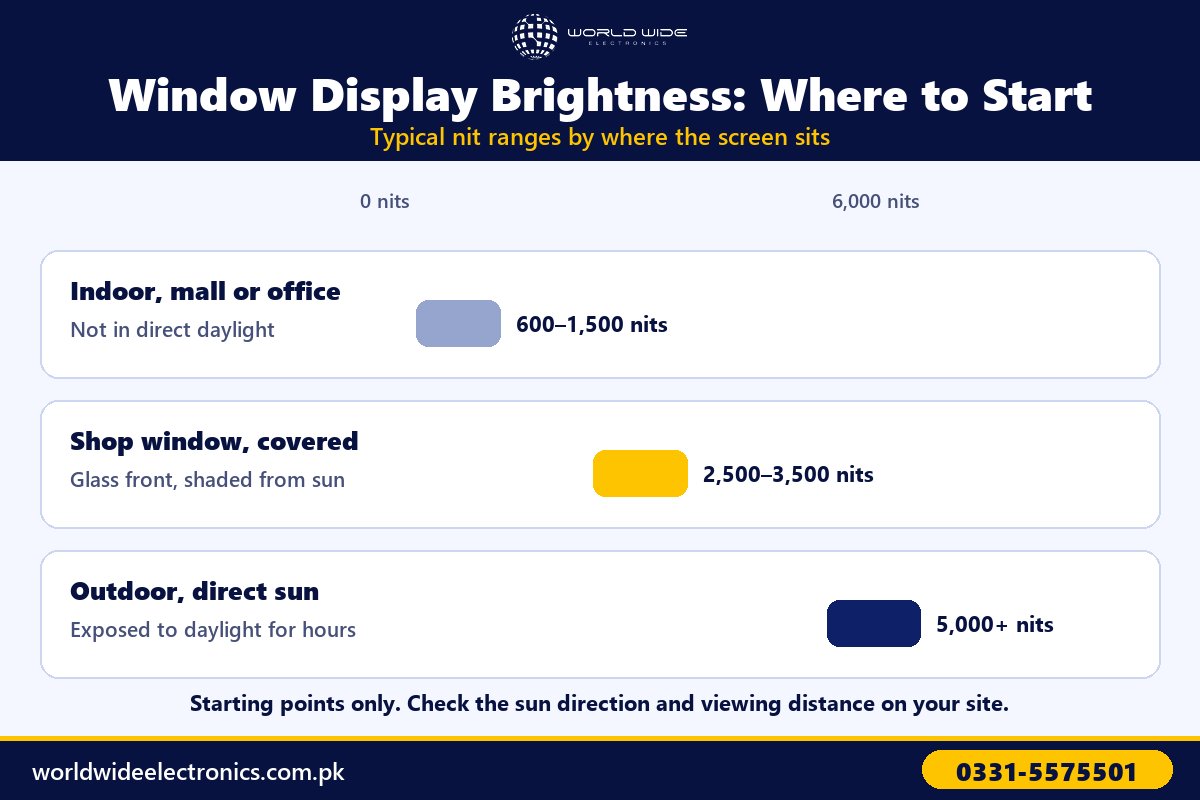
Brightness is the first thing to get right. A screen that looks perfect in the showroom can disappear in the afternoon sun. Brightness is measured in nits, and the right number depends on where the screen sits:
- Indoor, away from daylight: about 600 to 1,500 nits is normal for a mall or office.
- Shop window, covered glass front, shaded from direct sun: 2,500 to 3,500 nits is a sensible starting point.
- Exposed to direct sun for several hours: 5,000 nits or more, and an outdoor model.
Higher is not always better. A screen that is too bright after sunset can glare into the shop and distract people on the street. Choose a screen that can dim automatically, and set a lower brightness for evenings. Our outdoor LED screen brightness guide explains day and night settings in more detail.
Choosing the Right Size and Pixel Pitch
Size and pixel pitch decide how sharp the picture looks from where people actually stand. Pixel pitch is the distance between LED dots, measured in millimetres. A smaller number gives a sharper image, but costs more per square foot.
A simple rule of thumb: the closest viewer should be able to stand at a distance roughly equal to the pixel pitch in metres, or further, without seeing individual dots. For shop windows, where people walk past at a few metres, a fine pitch such as P2 is a common choice. Our pixel pitch and sizing guide has a full table by viewing distance.
Size should match the window and the street. A screen that fills the glass looks deliberate; a small screen floating in a large window looks like an afterthought. Measure the opening first, then decide how much of it the screen should cover, leaving room for the shop name or a frame.
Content Ideas for Shops
A screen that shows the same slide all day is wasted. Plan content in a simple calendar so the window always has something new to say. These content ideas for shops work for most retail businesses:
- New arrivals: one product at a time, large and well lit, with the price or a clear call to action.
- Sale and offers: a single clear message, such as “30% off this weekend”, with the end date.
- Festival and season: Eid, Ramadan, Independence Day and back-to-school campaigns, planned a few weeks ahead.
- Opening hours and location: useful at night, when the shop is closed but the screen is still on.
- Brand story: a short clip of how a product is made or a customer favourite, to build trust with people walking past.
- Directions to the shop: a QR code or social media handle, so people can act on the message later.
Keep each message short. A passer-by has only a few seconds, so one idea per slide works better than a full catalogue. Use large text, high contrast and few words, and avoid fast flashing effects, which are tiring to watch.
Common Mistakes Retailers Make
- Choosing brightness for the showroom, not the street. Test the screen in the time of day when the window is brightest.
- Ignoring glare. A screen that reflects the sun off the glass is hard to read. Check the angle and the glass finish before installing.
- Running the same slide for months. People stop noticing a screen that never changes.
- Leaving the screen on at full brightness all night. This wastes power and can annoy neighbours. Use a schedule.
- Forgetting maintenance. Dust on the face and loose cables reduce brightness and cause faults. Plan a regular check.
How to Measure Whether the Screen Works
Before you buy, decide what success looks like. A screen is a marketing tool, so measure it the same way you measure any campaign:
- Use a promo code or a unique offer. Show a code only on screen and track how many customers use it.
- Count visitors for a fixed period. Compare a week with the screen running and a week with it off, if you can, or compare the same weeks in different months.
- Ask at the till. A simple “How did you hear about this offer?” question shows whether people noticed the window.
- Track social media and QR scans for the messages you show on the screen.
Results vary by location, product and season, so compare trends over several weeks rather than judging one day. If you need a second opinion on your location, our team can review the frontage and recommend what to show.
Shop Front Screen Installation Checklist
Before installation, check the following:
- Window size, glass type and the direction it faces, to set the brightness.
- Power point nearby and whether the circuit can take the load.
- Mounting surface and how the screen will be fixed and serviced.
- Internet or USB content route, and who will update the playlist.
- Whether the shop front is in a building with rules on signage.
The full project steps are in our SMD screen installation process guide.
Frequently Asked Questions
Can a shop front LED screen be seen in daylight?
Yes, if it has the right brightness for its position. A screen behind covered glass needs far less brightness than one fully exposed to the sun. Tell us the window direction and we will recommend a suitable level.
Should the screen be indoor or outdoor?
If the screen sits behind the glass and is protected from rain, an indoor-rated model with higher brightness is often enough. A screen on the outside of the building needs an outdoor model. Our indoor vs outdoor SMD screens guide explains the difference.
How often should the content change?
Change the main message at least every one to two weeks, and rotate secondary content such as opening hours or product highlights more often. A screen that never changes loses attention.
Do I need a technical person to run it?
Day-to-day content updates are simple once the controller is set up. Repairs and cable work should be done by a trained technician.
Plan Your Shop Front Screen With Us
World Wide Electronics has supplied and installed LED displays across Pakistan since 1999, from shop fronts to large outdoor screens. Tell us the size of your window, the direction it faces and the message you want to show, and we will recommend the brightness, pixel pitch and layout for your shop. Contact us for a site survey and quotation.