Quick answer: Truss load capacity is the maximum weight a truss can carry safely, and it depends on the truss model, the span between supports, how the load is spread, how the truss is supported and what the load is hung from. Before any LED screen, light or speaker goes on a truss, read the load table from the truss manufacturer for your exact configuration, add the weight of every item, and run a rigging safety check on the day. Never estimate a load capacity from a general figure you found online.
Our truss systems in Pakistan carry most event equipment, from LED screens and lights to speakers and cameras. A load that looks light on paper can become a serious risk when the span is long, the weight is at one end or the frame is raised on hoists. This guide explains how to think about truss load capacity and gives a checklist to use before every event.
What Truss Load Capacity Means
Truss load capacity is the rated weight a truss section can support under defined conditions. The rating is not a single number for every situation. It changes with the following factors:
- Span: the distance between the supports. A longer span bends the truss more under the same weight, so the safe load falls as the span grows.
- Type of load: a load spread evenly along the truss is treated differently from a heavy item hung at one point.
- Configuration: a truss used flat on stands, hung from hoists, or built as a ground support tower has its own rating.
- Dynamic forces: movement, wind and vibration add to the static weight. A truss that holds a stationary load may not be safe for a moving one.
This is why the manufacturer’s load table matters. It gives the rating for each truss model, span and configuration. A figure taken from a general article, a forum or a different truss model can be wrong for your setup.
Know the Weight Before You Hang Anything
Most rigging problems start with an unknown weight. Before you plan a rig, collect the weight of every item that will be hung or placed on the truss:
- The LED screen cabinets or modules, plus the frame and brackets that hold them.
- Lights, speakers, cameras and cable runs attached to the truss.
- Motors, chain hoists and their control boxes.
- Processors, power distribution and any other equipment fixed to the structure.
- Rigging hardware, such as shackles, clamps and slings, which also add weight.
Use the manufacturer’s datasheet for each item, not an estimate. Add the totals together and compare them with the rated load for the truss configuration you will use. Leave a margin rather than planning to the limit, because the final weight often grows once cables, spare parts and the back-up equipment are added.
Point Loads and Spread Loads
A point load is a heavy item hung at a single position, such as a large speaker or a motor. A spread load is a weight distributed along the truss, such as a row of lights or a continuous LED screen frame. The two behave differently. A point load creates a concentrated force at one connection, which can overload a single clamp, hoist or joint even when the total weight is within the overall rating.
Where possible, spread heavy items along the truss and use more than one hanging point for each heavy item. Check the load table for point loads, because the rating for a point load is usually lower than the rating for an even spread.
Hoists, Clamps and Hardware
The truss is only as strong as its connections. Every hoist, clamp, shackle and sling in the rig has a working load limit, and that limit is the figure that matters for the connection. Check these points:
- Each chain hoist has a rated working load limit, and it must be above the load it lifts.
- Clamps and couplers must be the correct type for the truss, and their pins and bolts must be fitted and secure.
- Shackles and slings must be rated for the load and must not be bent, cracked or worn.
- Hanging points on the building or structure must be approved for the load by a qualified person.
Do not mix hardware from different systems unless the manufacturer confirms that they are compatible. A part that fits is not always a part that is rated for the load.
Ground Support Towers
When a truss cannot be hung from the building, it can be carried on ground support towers. These towers are common for outdoor stages, festivals and temporary screens. Their rated loads depend on the tower height, the base plate, the bracing and the ground the base sits on. Use the tower manufacturer’s table for the exact height and configuration, and check that the base is level and firm before the load goes on. Soft ground, uneven surfaces and wet soil can all reduce the safe load in ways that the table does not show.
Wind and Outdoor Events
An LED screen on a truss has a large surface area, so wind can add a significant force. Outdoor events need a wind check before the rig is raised and during the event. The organiser and the rigger should agree a wind limit above which the rig is lowered, closed or made safe. Our guide to the outdoor SMD screen covers the wider design points for outdoor screens, including the frame and the enclosure.
Rigging Safety Checklist
The checklist below covers the checks to make before and during every rig. Use it as a starting point, and adapt it to the venue and the rules that apply where you work.
| Check | What to look for | Who signs off |
|---|---|---|
| Load plan | Total weight of every item, with a margin, compared with the manufacturer’s load table | Rigging supervisor |
| Truss condition | No bends, cracks, damaged joints or missing bolts in any section | Rigger |
| Hardware | Hoists, clamps, shackles and slings rated for the load and free from wear | Rigger |
| Hanging points | Structure approved for the load, with the points checked for the planned weight | Qualified structural person |
| Ground support | Level, firm base, correct bracing and the right tower height for the load | Rigging supervisor |
| Electrical and cables | Cables secured, power protected and kept away from moving parts | Electrician |
| Wind and weather | Agreed wind limit and a plan for lowering or closing the rig | Event organiser and rigger |
| Exclusion zone | Area below the rig cleared of people during lifting and lowering | Site supervisor |
| Final check | Every hanging point and connection re-checked after the rig is at height | Rigging supervisor |
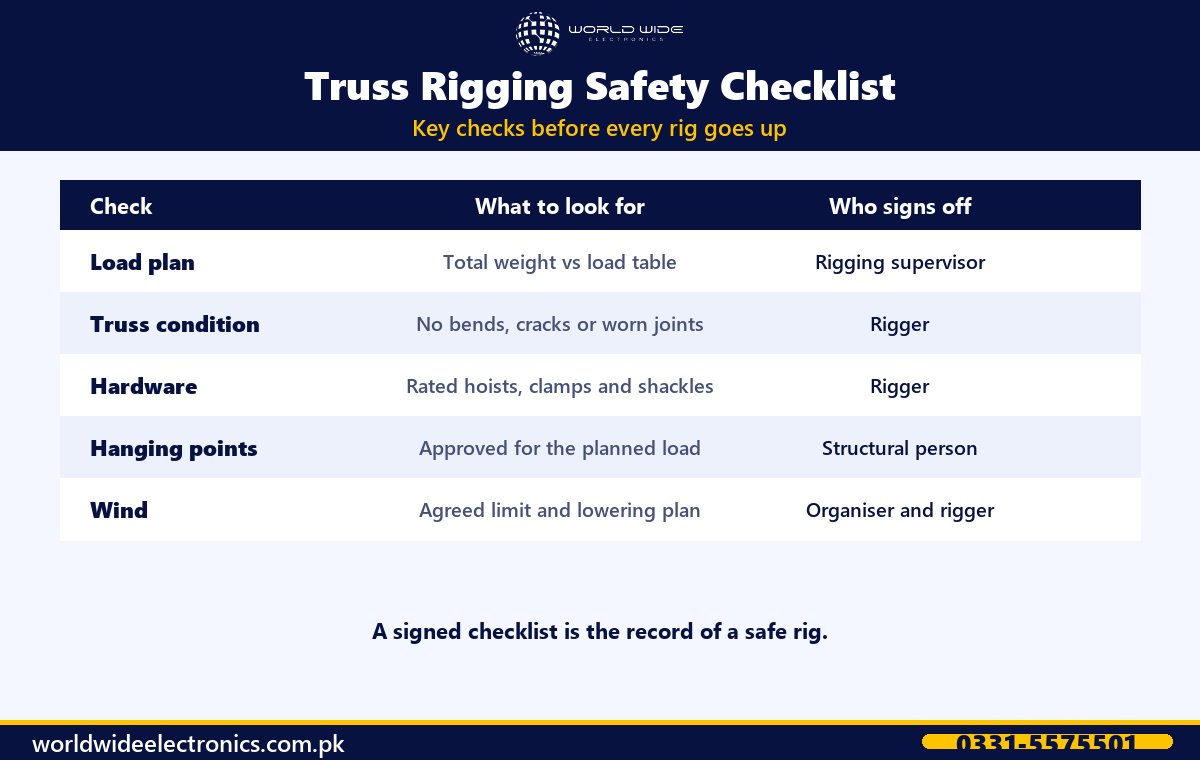
A signed checklist gives a clear record of who checked what, and it helps the next crew understand the rig if a problem comes up later.
Common Mistakes to Avoid
- Planning to the maximum: leaving no margin means any extra cable or part can overload the rig.
- Using a general figure: load values from a different truss or configuration do not apply to your rig.
- Ignoring the span: a longer span lowers the safe load, even when the truss model is the same.
- Hanging heavy items at one point: a single point load can overload a clamp or hoist.
- Skipping the day-of check: connections can loosen during transport and set-up.
Questions to Ask Before You Book a Rig
When you plan a stage or a screen on truss, ask these questions to make sure the supplier has planned for the load:
- Which truss model and configuration are you using, and where is its load table?
- What is the total weight of the screen, lights and other items on the truss?
- How is the load spread, and where are the point loads?
- Are the hanging points or ground support towers rated for this load?
- Who will rig and check the system, and who signs off the final check?
- What is the wind limit for an outdoor event, and what happens if it is reached?
A supplier who can answer each question with a specific figure or document is more likely to deliver a safe rig. For the structure itself, our guide to box truss vs triangle truss explains how the frame shape affects what it can carry and how it is used.
Related guides: Planning a High-Tech Event in Pakistan and SMD Screen for Events in Pakistan.
Frequently asked questions
What is truss load capacity?
Truss load capacity is the rated weight a truss can carry safely under defined conditions. The rating depends on the truss model, the span, the type of load, the configuration and any dynamic forces such as wind or movement. The manufacturer’s load table gives the figures for each case.
Can I use one load figure for every truss?
No. Each truss model and configuration has its own rating, and the safe load falls as the span increases. Use the load table for the exact truss and setup you plan to use, and do not apply a figure from a different model.
What is a point load on a truss?
A point load is a heavy item hung or placed at one position, such as a large speaker or a motor. It creates a concentrated force at the connection, so the rating for a point load is usually lower than the rating for a load spread evenly along the truss.
Who should check a truss rig before an event?
A trained rigging supervisor should plan the load, and a qualified rigger should check the truss, hardware and connections. The hanging points on a building need approval from a qualified structural person. Keep a signed record of the checks.
How does wind affect a truss rig?
Wind adds force to large surfaces such as LED screens. Agree a wind limit with the event organiser before the event, and plan how the rig will be lowered or closed if the limit is reached. Check the weather during the event, not only before it starts.