Looking for high-quality SMD screens in Pakistan for advertising, business communication, events, retail displays, or digital signage? World Wide Electronics supplies and installs premium indoor and outdoor SMD LED screens that deliver outstanding image quality, reliable performance, and long-term value for businesses across Pakistan.
With over 20 years of industry experience, we provide complete LED display solutions, including consultation, product selection, installation, configuration, training, and after-sales support. Our experienced team works with businesses, educational institutions, corporate offices, government organizations, event companies, shopping malls, and advertising agencies to deliver customized LED display systems for every application.
We proudly serve customers throughout Pakistan, including Karachi, Lahore, Islamabad, Rawalpindi, Faisalabad, Multan, Peshawar, Quetta, Hyderabad, and other major cities.
Whether you need a high-resolution indoor LED display for a conference room, a digital display for your retail showroom, a control room video wall, or a high-brightness outdoor advertising screen, our experts help you select the right solution based on your viewing distance, installation environment, and business objectives.
What is an SMD Screen?
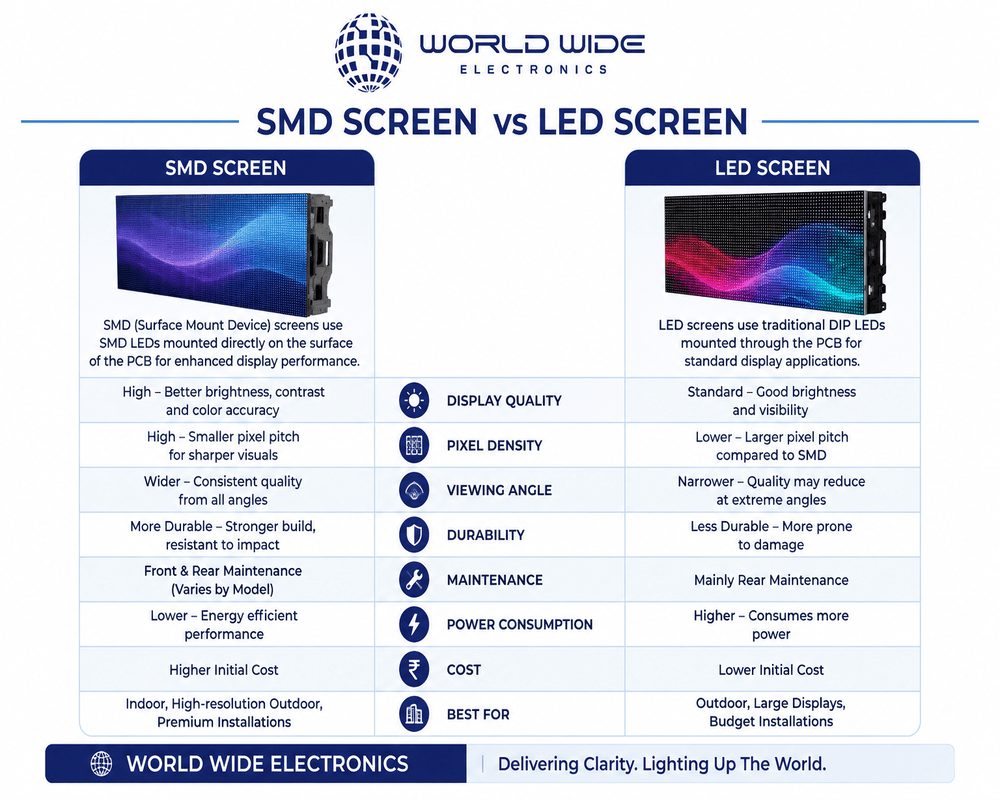
An SMD (Surface Mounted Device) Screen is an advanced LED display technology that uses tiny red, green, and blue (RGB) LED chips mounted directly onto a printed circuit board (PCB). This design produces sharper images, vibrant colours, higher contrast, smoother video playback, and wider viewing angles compared to traditional LED display technologies.
Because of its excellent image quality and energy efficiency, SMD technology has become the preferred choice for digital advertising, corporate communication, retail displays, educational institutions, entertainment venues, and public information systems.
Unlike conventional printed signage, SMD LED screens can display dynamic content such as:
- High-resolution images
- Full HD and 4K videos
- Live streaming
- Real-time announcements
- Digital advertisements
- Corporate presentations
- Interactive multimedia content
This flexibility allows businesses to update content instantly without printing new banners or posters, making SMD screens a cost-effective and future-ready communication solution.
Why Businesses in Pakistan Are Switching to SMD Screens
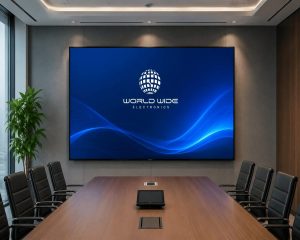
Modern businesses need faster, smarter, and more engaging ways to communicate with customers. Traditional billboards and printed banners are gradually being replaced by digital LED displays that deliver higher visibility, stronger customer engagement, and better long-term return on investment.
SMD screens allow businesses to promote products, display videos, broadcast announcements, and update marketing campaigns instantly without additional printing costs.
Benefits of SMD Screens
- Crystal-clear image quality
- Bright and vibrant colours
- Excellent visibility during both day and night
- Wide viewing angles
- Energy-efficient LED technology
- Long operational lifespan
- Low maintenance requirements
- Instant content updates
- Professional branding and customer engagement
Today, SMD LED screens are widely used by businesses and organizations across Pakistan for both indoor and outdoor applications.
Common Applications
- Shopping malls and retail stores
- Corporate offices and meeting rooms
- Universities and educational institutions
- Mosques and religious centres
- Hotels and restaurants
- Hospitals and healthcare facilities
- Airports and transportation terminals
- Government organizations
- Outdoor advertising billboards
- Concerts, exhibitions, and events
- Control rooms and monitoring centres
How SMD Screen Technology Works
Every pixel in an SMD LED display combines three miniature LEDs—red, green, and blue (RGB)—into a single compact package. By controlling the brightness of each colour individually, the display can reproduce millions of colours with exceptional accuracy, producing realistic images, smooth videos, and vibrant graphics.
This advanced technology offers significant advantages over conventional display systems, making it ideal for commercial environments where image quality and reliability are essential.
Advantages of SMD Technology
- Superior Image Quality: Sharp text, detailed graphics, and vibrant colours.
- Wide Viewing Angles: Consistent image quality from different viewing positions.
- Energy Efficiency: Lower electricity consumption with high brightness.
- Reliable Continuous Operation: Designed for long operating hours in commercial environments.
- Modular Maintenance: Individual LED modules can be replaced quickly without dismantling the complete display.
- Professional Performance: Suitable for retail, corporate, educational, advertising, and government projects.
Types of SMD Screens
Choosing the right SMD LED screen depends on your installation environment, viewing distance, brightness requirements, and intended application. Most commercial projects use either an Indoor SMD Screen or an Outdoor SMD Screen.
Indoor SMD Screens
Indoor SMD screens are designed for close viewing distances where exceptional image clarity and fine pixel resolution are essential.
Best Applications
- Conference Rooms
- Corporate Offices
- Retail Stores
- Shopping Malls
- Mosques
- TV Studios
- Universities
- Auditoriums
- Control Rooms
- Exhibition Centres
Key Features
- Fine pixel pitch
- Ultra-clear image quality
- Excellent colour accuracy
- Slim cabinet design
- Quiet operation
- Low power consumption
Outdoor SMD Screens
Outdoor SMD screens are engineered for maximum brightness and weather resistance, ensuring reliable performance under direct sunlight, rain, dust, and Pakistan’s changing weather conditions.
Best Applications
- Digital Billboards
- Roadside Advertising
- Commercial Buildings
- Sports Stadiums
- Outdoor Events
- Public Squares
- Transportation Hubs
- Stage Backdrops
Key Features
- High brightness for daylight visibility
- Weather-resistant cabinet design
- Dust and moisture protection
- Long operational lifespan
- Durable construction
- Large-format display options
Why Choose World Wide Electronics?
World Wide Electronics provides complete LED display solutions tailored to your project requirements. From selecting the right pixel pitch and screen size to professional installation, calibration, training, and after-sales support, our experienced team ensures every SMD screen delivers maximum performance, reliability, and long-term value.
Whether you require a compact indoor LED display or a large outdoor digital billboard, we are committed to delivering high-quality products, expert workmanship, and dependable technical support across Pakistan.
Indoor vs Outdoor SMD Screens: Which One is Right for You?
Choosing between an indoor and outdoor SMD screen depends on where the display will be installed, the viewing distance, ambient lighting, and the purpose of the screen. While both use advanced LED technology, each is engineered for different environments and performance requirements.
| Feature | Indoor SMD Screen | Outdoor SMD Screen |
|---|---|---|
| Brightness | 800–1,500 Nits | 5,000–8,000+ Nits |
| Viewing Distance | Close Viewing | Long Distance |
| Weather Protection | Indoor Use Only | IP65 Weatherproof |
| Pixel Pitch | P1.2 – P3 | P4 – P10 |
| Applications | Conference Rooms, Retail, Mosques | Billboards, Stadiums, Outdoor Advertising |
| Maintenance | Front or Rear Access | Front or Rear Service Options |
Our experts help you select the ideal LED display based on your installation environment, budget, viewing distance, and project requirements.
Key Features of Our SMD LED Screens
Every LED display supplied by World Wide Electronics is designed to deliver exceptional visual performance, long-term reliability, and energy-efficient operation. We supply commercial-grade LED display systems suitable for businesses, institutions, and public projects throughout Pakistan.
Ultra HD Picture Quality
Experience crystal-clear visuals with vibrant colours, deep contrast, and exceptional image clarity for presentations, advertising, videos, and live content.
High Refresh Rate
Refresh rates up to 3840Hz ensure smooth video playback without flickering, making our displays ideal for live events, broadcasting, and professional presentations.
Wide Viewing Angle
With viewing angles up to 160°, audiences enjoy consistent brightness and colour accuracy from almost every position.
Energy-Efficient Operation
Modern LED technology consumes significantly less electricity while delivering outstanding brightness, helping businesses reduce operational costs.
Modular Cabinet Design
Individual LED modules can be replaced quickly without removing the complete display, reducing maintenance time and minimizing downtime.
Long Service Life
Our commercial SMD screens are engineered for continuous operation with an expected lifespan of up to 100,000 hours under recommended operating conditions.
Reliable Performance
Outdoor LED displays are built with weather-resistant cabinets that withstand rain, dust, heat, and harsh environmental conditions commonly experienced across Pakistan.
Pixel Pitch Guide: Choosing the Right Resolution
Pixel pitch refers to the distance between two adjacent LED pixels. A smaller pixel pitch delivers higher resolution and is ideal for close viewing, while a larger pixel pitch is suitable for long-distance viewing and outdoor applications.
| Pixel Pitch | Recommended Viewing Distance | Best Applications |
|---|---|---|
| P1.2 | 1–2 metres | Control Rooms & Broadcast Studios |
| P1.5 | 2–3 metres | Corporate Boardrooms |
| P2 | 2–4 metres | Meeting Rooms & Retail Stores |
| P2.5 | 3–5 metres | Shopping Malls & Showrooms |
| P3 | 4–6 metres | Conference Halls |
| P4 | 5–8 metres | Indoor Events |
| P5 | 6–10 metres | Outdoor Advertising |
| P6 | 8–15 metres | Roadside Displays |
| P8 | 12–20 metres | Digital Billboards |
| P10 | 15+ metres | Large Outdoor LED Screens |
If you’re unsure which pixel pitch is suitable for your project, our technical team can recommend the best option after evaluating your viewing distance, installation location, and content requirements.
Where Are SMD Screens Used?
SMD LED displays have become an essential communication and advertising tool across multiple industries. Their flexibility, durability, and high visual impact make them suitable for both permanent installations and temporary events.
Retail & Shopping Malls
Promote products, offers, and promotional campaigns with dynamic digital displays that attract customers and increase engagement.
Corporate Offices
Create professional meeting environments using high-resolution LED displays for presentations, video conferencing, and company communications.
Control Rooms
Monitor surveillance systems, operational dashboards, and real-time data with high-definition LED video walls.
Mosques & Religious Centres
Display prayer timings, announcements, Quranic verses, and live event broadcasts with exceptional clarity.
Educational Institutions
Enhance classrooms, lecture halls, auditoriums, and campuses with modern digital display technology.
Hotels & Restaurants
Show menus, promotions, branding videos, and event information using vibrant indoor LED displays.
Events & Exhibitions
Create immersive visual experiences with large LED video walls for concerts, weddings, conferences, product launches, and exhibitions.
Outdoor Advertising
Capture maximum audience attention using high-brightness LED billboards installed along highways, commercial roads, and busy intersections.
Industries We Serve
- Retail & Shopping Centres
- Corporate Businesses
- Educational Institutions
- Government Organizations
- Healthcare Facilities
- Hospitality Industry
- Banking & Finance
- Event Management Companies
- Advertising Agencies
- Sports & Entertainment Venues
- Religious Institutions
- Transportation & Logistics
Every project is designed according to the client’s application, ensuring optimal performance, excellent image quality, and long-term reliability.
SMD Screen Price in Pakistan
One of the most common questions businesses ask is, “How much does an SMD screen cost in Pakistan?” The answer depends on several technical and project-specific factors. Since every LED display is customized according to its application, there is no fixed price for all projects.
At World Wide Electronics, we provide tailored quotations based on your installation requirements, screen size, pixel pitch, and project location, ensuring you receive the most cost-effective solution without compromising quality.
Factors That Affect SMD Screen Prices
- Pixel pitch (P1.2 to P10)
- Indoor or outdoor installation
- Screen dimensions
- LED display brand and components
- Brightness requirements
- Cabinet type
- Control system
- Steel structure and mounting
- Installation complexity
- Project location
Choosing the right specification is more important than selecting the lowest price. A properly designed LED display delivers better image quality, lower maintenance costs, and a longer operational lifespan.
How to Choose the Right SMD Screen
Selecting the right LED display requires careful planning. Our technical consultants evaluate your project before recommending the most suitable solution.
Consider These Factors Before Buying
- Viewing distance
- Indoor or outdoor environment
- Available installation space
- Required screen resolution
- Content type (Images, Videos, Live Streaming)
- Operating hours
- Budget
- Future maintenance requirements
Our goal is to recommend a solution that delivers excellent visual performance while providing the best return on your investment.
Professional SMD Screen Installation Services
Installing an LED display requires more than simply mounting panels. Proper planning, electrical design, calibration, and testing are essential for long-term performance.
Our experienced engineers manage every stage of the installation process to ensure your display operates efficiently from day one.
Our Installation Process
- Project Consultation
We understand your objectives, display requirements, and installation environment. - Site Survey
Our team evaluates mounting conditions, power availability, viewing distance, and structural requirements. - System Design
We recommend the ideal pixel pitch, cabinet configuration, controller, and display dimensions. - Professional Installation
Our certified technicians install the LED display safely and accurately. - Configuration & Calibration
Brightness, colour balance, image alignment, and display settings are optimized for the best viewing experience. - Testing & Training
The system is fully tested, and your staff receives operational training for content management. - After-Sales Support
We continue providing maintenance, technical assistance, and spare parts whenever required.
Leading LED Display Brands We Offer
To ensure exceptional reliability and image quality, World Wide Electronics supplies LED display solutions from globally recognized manufacturers and trusted technology partners.
- Absen – Premium commercial and professional LED display solutions.
- Qiangli – Reliable indoor and outdoor LED display systems for commercial projects.
- NovaStar – Advanced LED display control systems, processors, and video controllers.
Using internationally recognized brands allows us to deliver displays with superior performance, excellent colour reproduction, reliable operation, and long-term durability.
Complete LED Display Solutions
We provide complete turnkey solutions for businesses looking to install professional LED display systems anywhere in Pakistan.
Our Services Include
- Free Technical Consultation
- Project Planning
- Screen Design & Layout
- Indoor LED Displays
- Outdoor LED Displays
- Video Wall Solutions
- Steel Structure Design
- Professional Installation
- LED Display Configuration
- Content Management Training
- Preventive Maintenance
- Technical Support
Why Choose World Wide Electronics?
Businesses across Pakistan trust World Wide Electronics because we combine premium products with experienced engineering, professional installation, and responsive technical support. Every project is planned according to the client’s objectives, ensuring maximum performance and long-term reliability.
Why Businesses Choose Us
- 20+ Years of Industry Experience
- Professional Technical Team
- Premium LED Display Brands
- Customized Display Solutions
- Nationwide Installation Services
- Competitive Project Pricing
- Fast Technical Support
- Reliable After-Sales Service
- High-Quality Components
- Complete Turnkey Solutions
Whether you require a single indoor display for your office or a large outdoor digital billboard, we provide complete LED display solutions designed to meet your business goals while delivering exceptional visual performance.
Recent SMD Screen Projects Across Pakistan
World Wide Electronics has successfully completed LED display projects for businesses, educational institutions, corporate offices, event companies, retail brands, and public organizations across Pakistan. Every project is carefully planned to deliver exceptional image quality, reliable performance, and long-term value.
Indoor LED Display Solutions
- Conference room LED displays
- Corporate boardroom video walls
- Retail showroom digital displays
- Shopping mall advertising screens
- Mosque LED display systems
- Control room video walls
Outdoor LED Display Solutions
- Digital billboards
- Roadside advertising screens
- Commercial building LED displays
- Outdoor event screens
- Stage backdrop LED walls
- Sports venue displays
Every installation is completed by our experienced technical team using high-quality LED panels and industry-leading control systems to ensure long-term reliability.
Frequently Asked Questions (FAQs)
1. What is an SMD Screen?
An SMD (Surface Mounted Device) screen is an advanced LED display that uses miniature RGB LEDs mounted directly onto a PCB to produce sharp images, vibrant colours, and wide viewing angles.
2. What is the difference between an SMD screen and a traditional LED display?
SMD screens provide higher resolution, better colour accuracy, wider viewing angles, and smoother visuals compared to conventional LED displays.
3. Which pixel pitch is best for indoor use?
Indoor installations usually use P1.2, P1.5, P2, P2.5, or P3 depending on the viewing distance and required image quality.
4. Which pixel pitch is recommended for outdoor advertising?
Outdoor projects commonly use P4, P5, P6, P8, or P10 depending on viewing distance and installation height.
5. How much does an SMD screen cost in Pakistan?
The price depends on the screen size, pixel pitch, brightness, cabinet type, installation requirements, and controller system. Contact us for a customized quotation.
6. How long does an SMD screen last?
A professionally maintained commercial SMD LED display can operate for up to 100,000 hours.
7. Can SMD screens operate during load shedding?
Yes. They can operate using UPS systems, generators, or properly designed solar power solutions.
8. Are outdoor SMD screens waterproof?
Yes. Outdoor LED displays are designed with weatherproof cabinets that protect against rain, dust, and harsh environmental conditions.
9. Can I update content remotely?
Yes. Most modern LED display systems support content management through LAN, Wi-Fi, cloud platforms, USB, or dedicated software.
10. What types of content can be displayed?
You can display images, videos, presentations, advertisements, live TV, social media feeds, announcements, and live streaming content.
11. Do you provide installation services?
Yes. We provide complete installation, configuration, calibration, testing, training, and after-sales technical support throughout Pakistan.
12. Which industries use SMD screens?
SMD screens are widely used by retailers, shopping malls, corporate offices, educational institutions, government organizations, hospitals, hotels, restaurants, event companies, and advertising agencies.
Why Businesses Across Pakistan Trust World Wide Electronics
Choosing the right LED display partner is just as important as selecting the right screen. Our team focuses on delivering complete display solutions rather than simply supplying hardware. From consultation and system design to installation and ongoing technical support, every project is managed with attention to quality and long-term performance.
- Over 20 years of industry experience
- Professional project consultation
- Indoor and outdoor LED display specialists
- Premium international LED display brands
- Experienced installation engineers
- Nationwide project execution
- Reliable after-sales technical support
- Customized solutions for every industry
Get a Free SMD Screen Consultation
Whether you’re planning a retail display, conference room LED wall, digital billboard, mosque display, control room video wall, or large-scale outdoor advertising project, our experts are ready to help you choose the right solution.
We provide complete consultation, product recommendations, installation planning, and customized quotations based on your project requirements.
Our Consultation Includes
- Project requirement analysis
- Pixel pitch recommendation
- Screen size calculation
- Viewing distance evaluation
- Installation planning
- Budget estimation
- Complete project quotation
Contact World Wide Electronics today to discuss your project and receive a customized SMD LED display solution designed for your business.
Conclusion
SMD screens have transformed the way businesses communicate, advertise, and engage with their audiences. Whether you need an indoor LED display for presentations or a high-brightness outdoor digital billboard, investing in the right display technology can significantly improve visibility, customer engagement, and brand recognition.
At World Wide Electronics, we combine premium LED display technology, experienced engineering, and professional installation services to deliver complete solutions for businesses across Pakistan. Our commitment to quality, innovation, and long-term support makes us a trusted partner for indoor and outdoor SMD screen projects of every size.
Ready to upgrade your business with a professional LED display? Contact our team today for expert advice and a free project consultation.