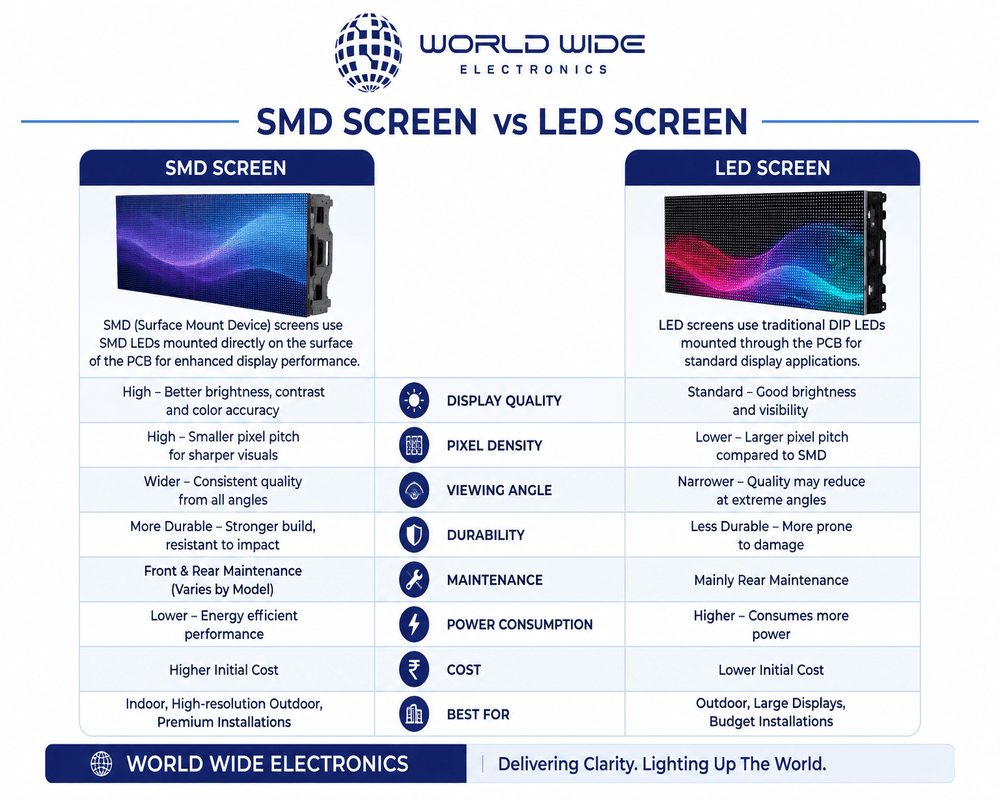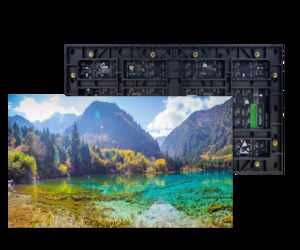
Every business that wants a big, bright display eventually asks the same question: should we rent or buy an SMD screen? An event company running weekend weddings, a brand planning one product launch, and a shopping mall that needs advertising all year each have a different answer. The wrong choice either locks money into a screen that sits in a warehouse, or keeps you paying rental bills for something you could have owned. If you only need a display for a few days, an SMD screen on rent with installation and a technician is often the simplest route. This guide walks you through the factors that actually decide it: how often you need a screen, the true cost per event, and the ownership and maintenance costs that are easy to forget.
Rent or Buy an SMD Screen: The Short Answer
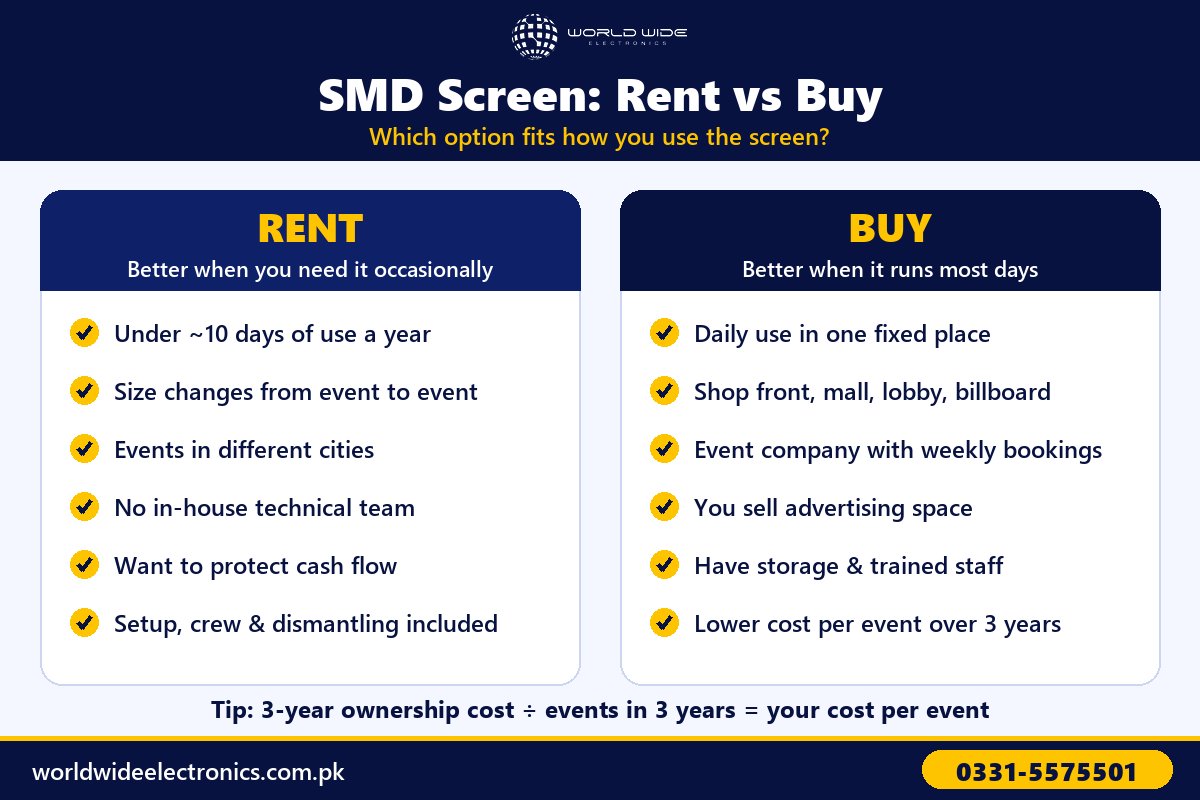
Renting usually makes sense when you need a screen occasionally, in different sizes or in different cities. Buying usually makes sense when the screen will be used most days of the year, in the same place or by your own team. Everything in between depends on numbers you can work out for your own business, and the rest of this guide shows you how.
| Your situation | Usually better | Why |
|---|---|---|
| One-off launch, conference or wedding | Rent | No upfront cost, setup and crew included |
| A few events a year, different venues and sizes | Rent | You get the right size each time without storing anything |
| Event company with bookings most weekends | Buy (or mix) | Rental fees add up faster than the cost of owning |
| Shop front, mall, office lobby or billboard | Buy | The screen runs every day in one fixed place |
| Testing digital advertising for the first time | Rent first | Prove the results before committing capital |
How Often You Need a Screen Decides Most of It
The single biggest factor in the SMD screen rental vs purchase decision is frequency. Count how many days in the next 12 months you will realistically use a screen, including setup days.
- Under 10 days a year: renting is almost always cheaper and far less hassle.
- 10 to 40 days a year: run the cost comparison below. The answer depends on screen size, travel and whether you have your own crew.
- More than 40 days a year, or permanent use: buying normally wins, as long as you can store, transport and maintain the screen properly.
Be honest about the forecast. Many businesses buy a screen expecting weekly events, then use it a handful of times. Look at your bookings from last year, not only your plans for next year.
Work Out the Cost per Event
Comparing a rental quote with a purchase price is misleading, because one is for a few days and the other is for many years. Instead, compare the cost per event of each option over the same period, for example three years.
Cost per event when you rent
This is simple: the rental quote for the screen size you need, plus anything not included, such as transport outside the city, extra setup days or a generator. A good rental package already covers delivery, installation, the controller, a technician on site and dismantling.
Cost per event when you buy
Add up everything you will spend over three years, then divide by the number of events in that time:
- Purchase price of the panels, cabinets and controller
- Installation frame, truss or mounting structure
- Transport to each venue, and loading crew
- Your own technician’s salary, or paying a freelancer each time
- Storage space for flight cases and spare parts
- Maintenance, repairs and spare modules
- Insurance, if you take it
Total three-year ownership cost ÷ number of events in three years = your cost per event. If that number is clearly lower than a typical rental quote, buying makes financial sense. If it is close, renting is usually safer, because it keeps your cash free and moves the risk of faults to the rental company.
For a feel of what affects the purchase side, such as pixel pitch, indoor or outdoor build and screen size, read our guide to SMD screen prices in Pakistan and their types and uses.
Ownership and Maintenance Costs People Forget
The purchase price is only the start. These ownership and maintenance costs are what usually change the answer:
- Storage: a 12 x 8 ft rental-style screen packs into several heavy flight cases. You need a dry, dust-free space, not an open godown.
- Transport and handling: every trip needs a suitable vehicle and trained people. Dropped cabinets and cracked module corners are the most common damage on mobile screens.
- Technical staff: someone must build the screen, set up the LED controller, map the content and fix problems during the event.
- Spare parts: keep spare modules, receiving cards and power supplies from the same batch, so colours match when you replace one.
- Wear and protection: heat, dust, power surges and moisture shorten screen life. Our article on things that can damage your SMD screen covers how to avoid them.
- Technology change: finer pixel pitches get more affordable every year. A rental company refreshes its stock; an owner keeps the same screen until it pays for itself.
When Renting an SMD Screen Is the Better Choice
- You need it occasionally. A launch, an annual dinner, a sports screening or a wedding season.
- Sizes change from event to event. A small indoor wall for a seminar one month, a large outdoor screen for a concert the next.
- You work in many cities. Hiring locally avoids long-distance transport of heavy cases.
- You have no technical team. The rental crew installs, runs and dismantles the screen.
- You want to protect cash flow. Rental is an event expense, not a large capital purchase.
Outdoor events need high-brightness, weather-resistant cabinets, while halls and marquees need finer pixel pitch for close viewing. For the different ways screens are used at concerts, corporate shows and exhibitions, see our guide to the SMD screen for events in Pakistan.
When Buying an SMD Screen Is the Better Choice
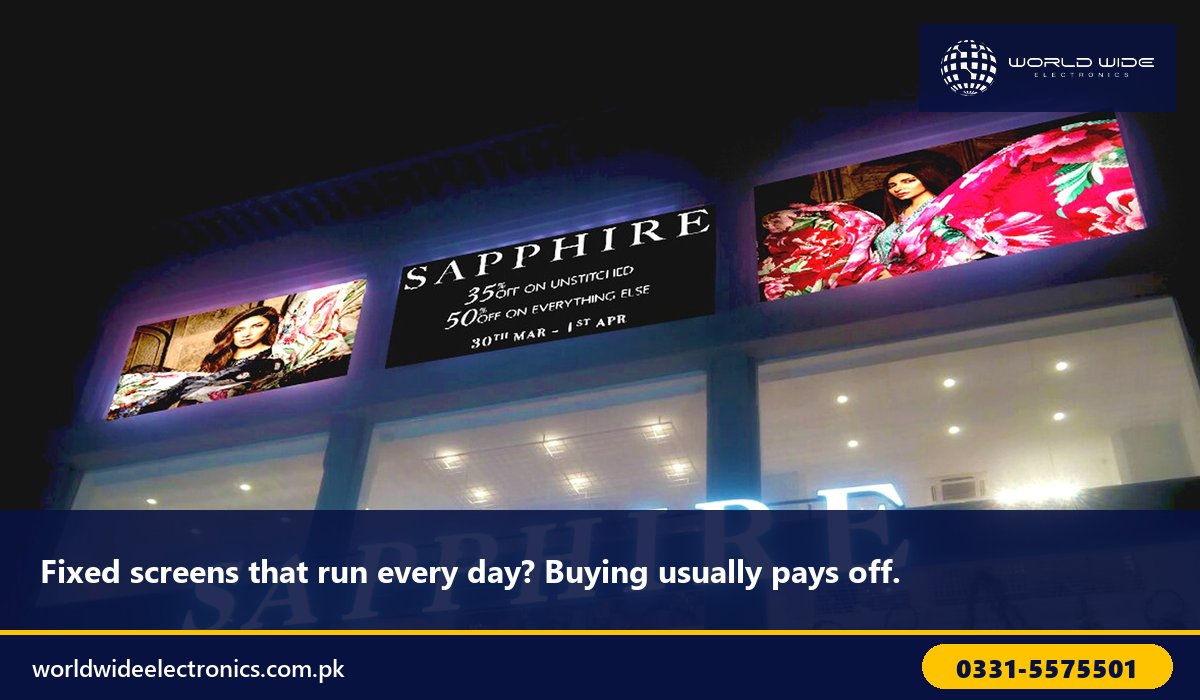
- The screen stays in one place. Shop fronts, malls, showrooms, restaurants, office lobbies, mosques, schools and roadside billboards.
- You run it every day. Daily advertising and information displays pay back quickly compared with rental.
- Screens are part of your business. Event and production companies with regular bookings can earn from their own stock.
- You sell advertising space. A digital billboard earns income every day it runs.
Fixed Installation vs Rental-Style Screens
If you buy, decide what kind of screen you are buying. Fixed installation screens are built for one wall or structure and are not designed to be moved. Rental-style screens use lighter die-cast cabinets with quick locks, so they can be assembled and packed many times. An event company that buys a fixed screen, or a shop that buys rental cabinets, often pays for the wrong features. Tell your supplier exactly how the screen will be used.
A Middle Path: Buy for Daily Use, Rent for Peaks
Many businesses do both. A brand might own the indoor screen in its flagship store and rent a large outdoor screen for its yearly launch. An event company might own two medium screens that cover most weekend bookings and rent extra panels for big concerts. This keeps your own equipment busy while avoiding a large purchase for a few peak days.
Questions to Ask Before You Decide
- How many days will we use a screen in the next 12 months, based on real bookings?
- Will it be indoor, outdoor or both, and what size and pixel pitch do we need?
- Do we have a safe place to store it, and people trained to install and run it?
- What does a rental quote include: delivery, setup, controller, technician, dismantling?
- If we buy, what warranty, spare parts and after-sales service come with the screen?
- What is our cost per event for each option over three years?
Frequently Asked Questions
Is it cheaper to rent or buy an SMD screen?
For occasional use, renting is cheaper because you pay only for the days you need. For daily or near-daily use, buying is cheaper over a few years. Work out the cost per event for both options over the same period to see where your break-even point is.
How many events before buying an SMD screen pays off?
There is no single number, because it depends on screen size, transport, staff and maintenance. Divide your total three-year ownership cost by the events you expect in that time and compare it with a typical rental quote. If you use a screen fewer than about 10 days a year, renting nearly always wins.
What is included when you rent an SMD screen?
A complete rental usually includes the screen, controller, cabling, delivery, installation, a technician during the event and dismantling. Always confirm this in writing, along with any charges for extra days or out-of-city travel.
Can I buy a screen that was used for rental?
Some suppliers sell ex-rental stock. Check the age of the modules, colour consistency across panels, availability of spare modules from the same batch and the warranty before you agree.
Get Advice on Renting or Buying
World Wide Electronics has supplied, installed and rented LED displays across Pakistan since 1999. Tell us how often you need a screen, where it will be used and the size you have in mind, and we will help you compare renting and buying for your business. Contact us for a free consultation.