
Inverex Solar Energy SMD Screen Case Study: Indoor & Outdoor Installation in Karachi, Lahore, Islamabad
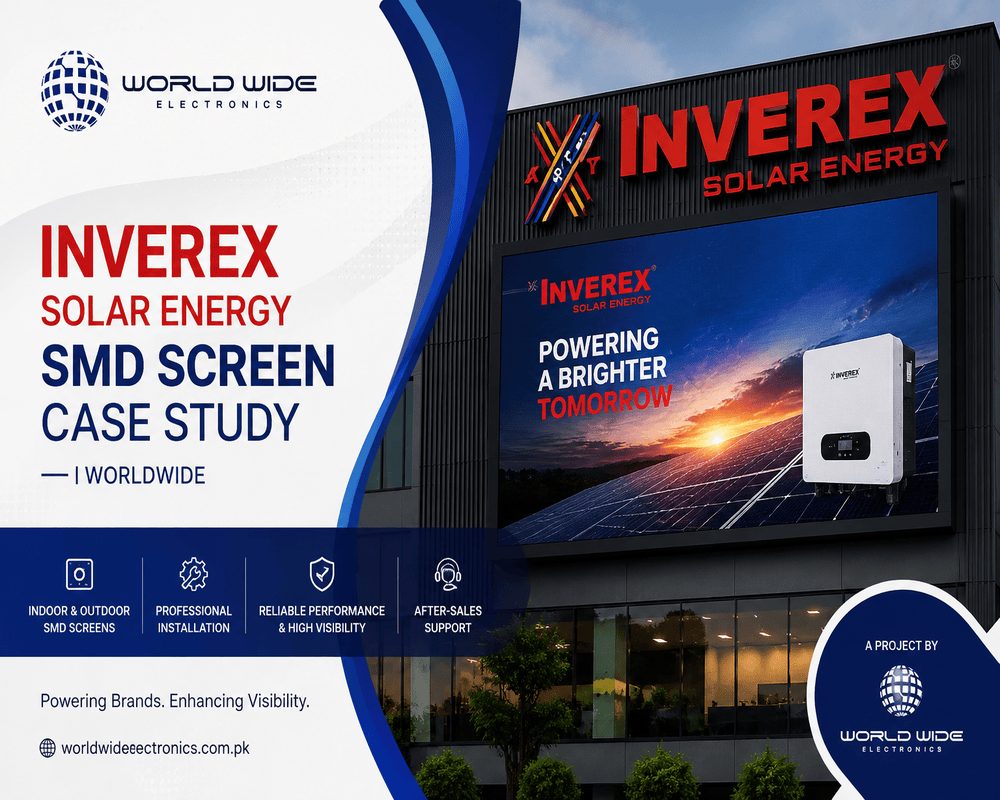
Inverex Solar Energy installed both indoor and outdoor SMD screens across in Karachi, Lahore, Islamabad powered through an Inverex solar energy setup instead of relying fully on grid electricity. The project, executed by Worldwide Electronics, covered site survey, panel-to-screen load calculation, installation, and a [X-month] performance review. Outcome: reduced electricity dependency, stable screen uptime during load-shedding, and a documented cost/performance comparison between indoor and outdoor units. Project Overview Why This SMD Screen Case Study Matters Most SMD screen buyers in Karachi, Lahore, and Islamabad ask the same question before installation: will the screen survive daily load-shedding without flickering, restarting, or burning out its driver cards? This case study documents a real installation where [Inverex Solar Energy needed both indoor and outdoor SMD screens, and chose to pair them with an Inverex solar energy system rather than a diesel generator or UPS-only backup. Location: [Karachi / Lahore / Islamabad ] Screen type: Indoor + Outdoor (dual setup) Power source: Grid + Inverex solar hybrid Installer: Worldwide Electronics Client Requirement Indoor vs Outdoor SMD Screen Needs The indoor screen was required for showroom and control room, where brightness needs are lower but color accuracy and viewing angle matter more. The outdoor screen was required for stadium wall , where direct sunlight, dust, and heat exposure are constant issues in Pakistani weather. Indoor requirement: high refresh rate, low pixel pitch, controlled ambient light Outdoor requirement: IP65-rated weatherproofing, higher brightness (nits), heat tolerance Shared requirement: uninterrupted power during 4–8 hour load-shedding windows Why Inverex Solar Energy Was Chosen as the Power Backbone Running SMD screens on generators is costly and noisy for commercial spaces; running them on UPS-only setups drains batteries fast because SMD panels draw continuous load, not intermittent load. Inverex solar panels were selected because the daytime solar generation could offset the screen’s peak draw hours, while the inverter handled the switch during outages. Continuous power draw of SMD screens vs battery-only backup limitations Daytime solar generation matched to screen operating hours Long-term electricity bill reduction vs generator fuel cost Installation Process From Site Survey to Final Setup The installation followed a fixed sequence to make sure the solar system and the screens were sized correctly for each other undersizing the solar setup is the most common reason SMD screens still go dark during load-shedding. Site survey and load assessment (indoor + outdoor screen wattage combined) Solar panel and inverter sizing based on [X kW] load requirement Structural mounting for outdoor screen (wind load, drainage, sun angle) Indoor screen frame and cabinet installation Wiring integration between Inverex inverter, grid supply, and screen control system Testing under both grid-power and solar-only conditions Final calibration (brightness, color, refresh rate) for both units Technical Specifications Indoor vs Outdoor SMD Screen Comparison Buyers often assume one SMD screen spec works for both indoor and outdoor use it doesn’t. Below is the specification comparison used to plan this project. Specification Indoor SMD Screen Outdoor SMD Screen Pixel Pitch P2 / P2.5 P6 / P8 Brightness (nits) 800–1500 nits 4000–6000 nits IP Rating IP30–IP40 (front & back, not weatherproof) IP65 (front) / IP54 (back) Refresh Rate 1920 Hz–3840 Hz (higher, for close-up clarity) 1920 Hz (standard, distance viewing) Power Draw (avg) 150–200 watts/sq.m 250–350 watts/sq.m Power Draw (peak) 400–500 watts/sq.m 700–900 watts/sq.m Viewing Distance 2–5 meters 10 meters and above Lifespan (avg) 60,000–100,000 hours 80,000–100,000 hours Operating Temperature 0°C to 40°C -20°C to 60°C Solar Load Contribution 30–40% of total (lower draw, indoor-controlled use) 60–70% of total (higher draw, longer daily runtime) Results and Performance After Installation After 8 weeks of operation, the setup was reviewed against the original goals: uptime during outages, brightness consistency, and electricity cost impact. Screen uptime during load-shedding: Before installation, both screens went dark during every outage (average 4–6 hours daily downtime). After the Inverex solar setup, uptime during load-shedding improved to near-continuous operation, with only brief 2–3 second interruptions during the automatic grid-to-solar switchover. Grid electricity units consumed for screen operation: Before: approximately 180–200 units/month drawn from grid for screen operation alone. After: dropped to approximately 60–70 units/month, with the remaining load covered by solar generation during daylight hours. Reported issues (if any) and how they were resolved: One issue was noted in week 3 the outdoor screen showed slight brightness flicker during cloudy afternoons when solar output dropped below the screen’s peak draw. This was resolved by adjusting the inverter’s auto-switch threshold so it shifted to grid support earlier, before solar output dipped too low. Maintenance visits required in the review period: 2 visits one scheduled check at the 4-week mark, and one unscheduled visit to fix the brightness flicker issue mentioned above. Cost and Energy Savings Breakdown Cost is the first question every Karachi, Lahore, and Islamabad client asks before approving an SMD + solar project. Here is the cost structure used in this case study Indoor SMD screen cost: PKR 450,000 – 600,000 (varies by size, pixel pitch, and panel brand) Outdoor SMD screen cost: PKR 900,000 – 1,300,000 (higher due to weatherproofing and increased brightness requirements) Inverex solar panel + inverter setup cost: PKR 700,000 – 950,000 (depends on system size, e.g. a 5–7 kW hybrid setup) Installation and mounting cost: PKR 150,000 – 200,000 (structural mounting, wiring, and labor) Monthly electricity saving post-installation: PKR 18,000 – 25,000 (from shifting screen load off the grid onto solar) Estimated payback period: approximately 3 – 4 years (solar system cost weighed against electricity savings) Total estimated project cost: PKR 2,200,000 – 3,050,000 (indoor + outdoor screen + solar system + installation) Key Takeaways for Businesses in Karachi, Lahore, and Islamabad Indoor and outdoor SMD screens need separate spec planning never use one quote for both Solar sizing must account for continuous SMD load, not average household load Load-shedding pattern in your specific city/area should be checked before sizing the inverter Get a written breakdown of screen + solar cost separately, not as one bundled number Ask the installer for a post-installation performance review period (like the one used in